
1991
Manaus, Brazil
Judo and jiu-jitsu — together from day one
First steps at the Jigoro Kano academy in Dom Pedro, Manaus, with Rildo. Judo and Brazilian Jiu-Jitsu trained side by side from the very beginning — the double base that never changed.
Welcome to my journey
Brazilian Jiu-Jitsu•Judo•Public Security•Intelligence
More than three decades dedicated to martial arts, competition, teaching, law enforcement training and tactical intelligence — since 1991.
Years
of experience
International
titles
Students
trained
Countries
visited
Law enforcement
instructor
Intelligence
& technology specialist
1991 → 2006 black belt → 1970 5th degree
Brazilian Jiu-Jitsu · Judo · Public Security
My journey began in judo and evolved into a lifelong passion for Brazilian Jiu-Jitsu. I have competed in Brazil and across Europe, winning important titles and representing my teams with pride.
I trained under great mentors from the Carlson Gracie Team, including Professor Alberto dos Santos and Professor Marcelo Saporito.
Alongside the mats, I built a solid path in public security, law enforcement training and tactical intelligence.
Today, based in Belgium, I continue to teach, train and share knowledge — inspiring the next generation on and off the mats.
1991 — Present · -21 years
 ▲Brazilian Jiu-Jitsu
 ▲Judo
▲Judo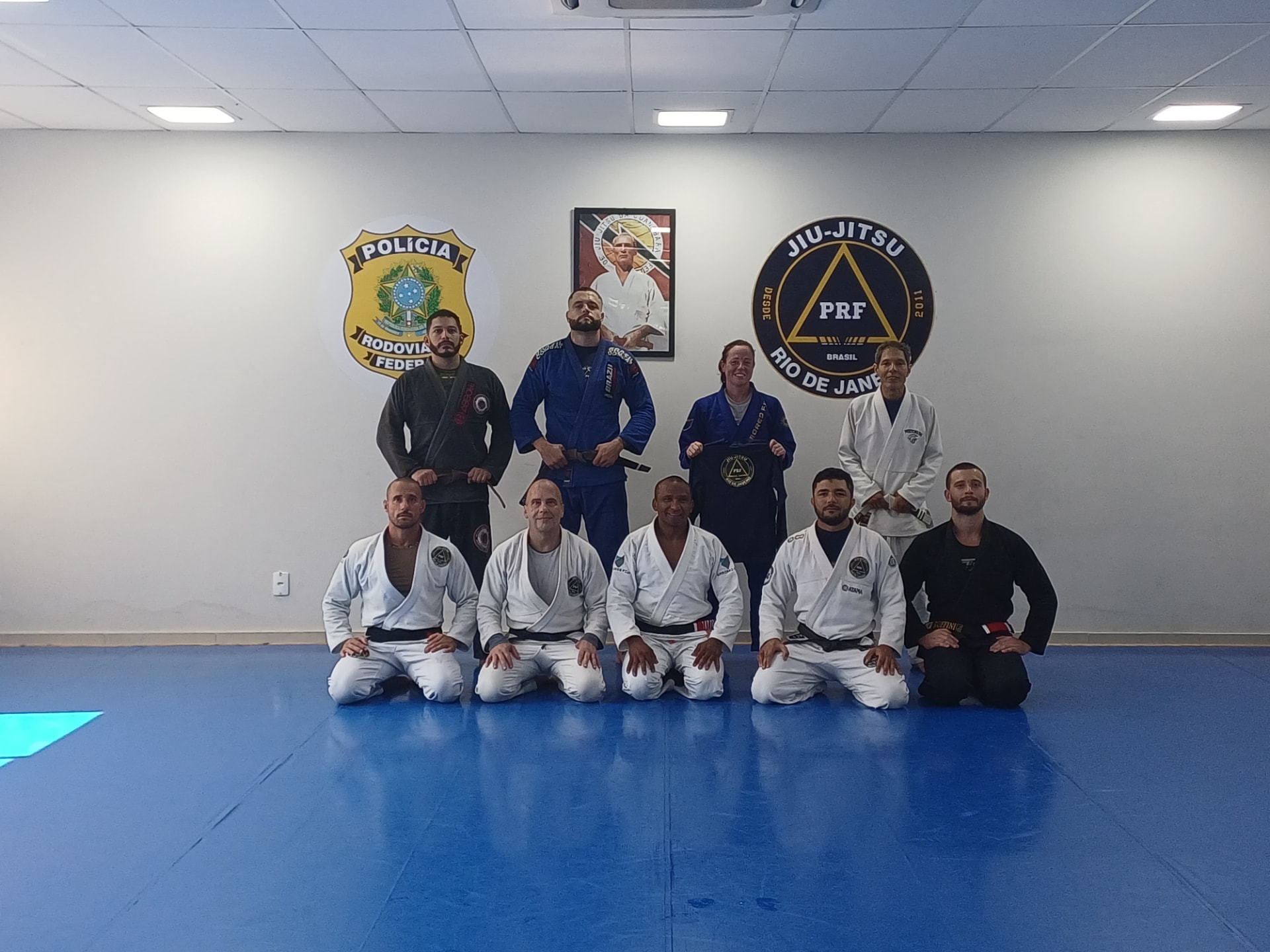 ▲Public Security
 ▲Intelligence & Technology
About
It started with judo — grips, balance, the discipline of falling and standing back up. Brazilian Jiu-Jitsu came next, inside the Carlson Gracie Team environment, under Professor Alberto dos Santos and Professor Marcelo Saporito: a school of pressure, top game and relentless competition.
A Brazilian national title at purple belt in 1997 confirmed the direction. Europe followed: France, Luxembourg, Belgium — competing in the opens that defined the continental scene in the early 2000s, then teaching, cornering and building teams.
Parallel to the mats runs a second career in public security, law-enforcement defensive tactics and tactical intelligence — the same principles of control, timing and restraint, applied where the stakes are different.
Lineage
Carlson Gracie Team
Professors
Alberto dos Santos · Marcelo Saporito
Since 1989
Manaus, end of the eighties. A teenager walks into a judo dojo and never really leaves the mats. What follows is more than three decades between Amazonas, Rio and Europe.
Manaus, Amazonas
It started at the Jigoro Kano academy in Dom Pedro, with Rildo — judo and Brazilian Jiu-Jitsu trained side by side from the very first day. Kumi-kata, ukemi, thousands of throws: the base that still shapes every class and every police programme taught today, and that later became a black belt in both arts.
Manaus, Amazonas
Jiu-jitsu in Amazonas was still being built. Academia Barracão, led by Paulo Ameba, and HBJ, with Domberto and Cássio Façanha, were the strongest houses on the scene — hard rooms, few black belts, and everyone training against everyone. Nova União had not arrived yet; it was only beginning to take shape.
Manaus, Amazonas
The arrival of Professor Alberto dos Santos changed the level of the state. Structured Carlson Gracie methodology reached the north of Brazil: pressure passing, top control, competition-first mentality.
Carlson Gracie Team
Training moved to the Carlson Gracie environment under Albertinho — expensive mats for a young competitor, but the school that defined the game: heavy top pressure and submissions as a consequence of position.
Brazil
A national title at purple belt confirmed the direction, and opened the road that would later lead to France, Luxembourg and Belgium.
Brazil · Europe
Training continued across several academies and countries, adding judo, jiu-jitsu and police defensive tactics into one single method — the one that became Andrade Junior Team.
Mat Culture
Seminars, affiliates and police programs — from Rio de Janeiro to Portugal, Luxembourg and Belgium.
Brazil
Training with the PRF alongside Valery, judo world champion: defensive tactics applied to real duty.
Brazil
A training session, not a seminar: kumi-kata, throws and transitions between judo and jiu-jitsu black belts.
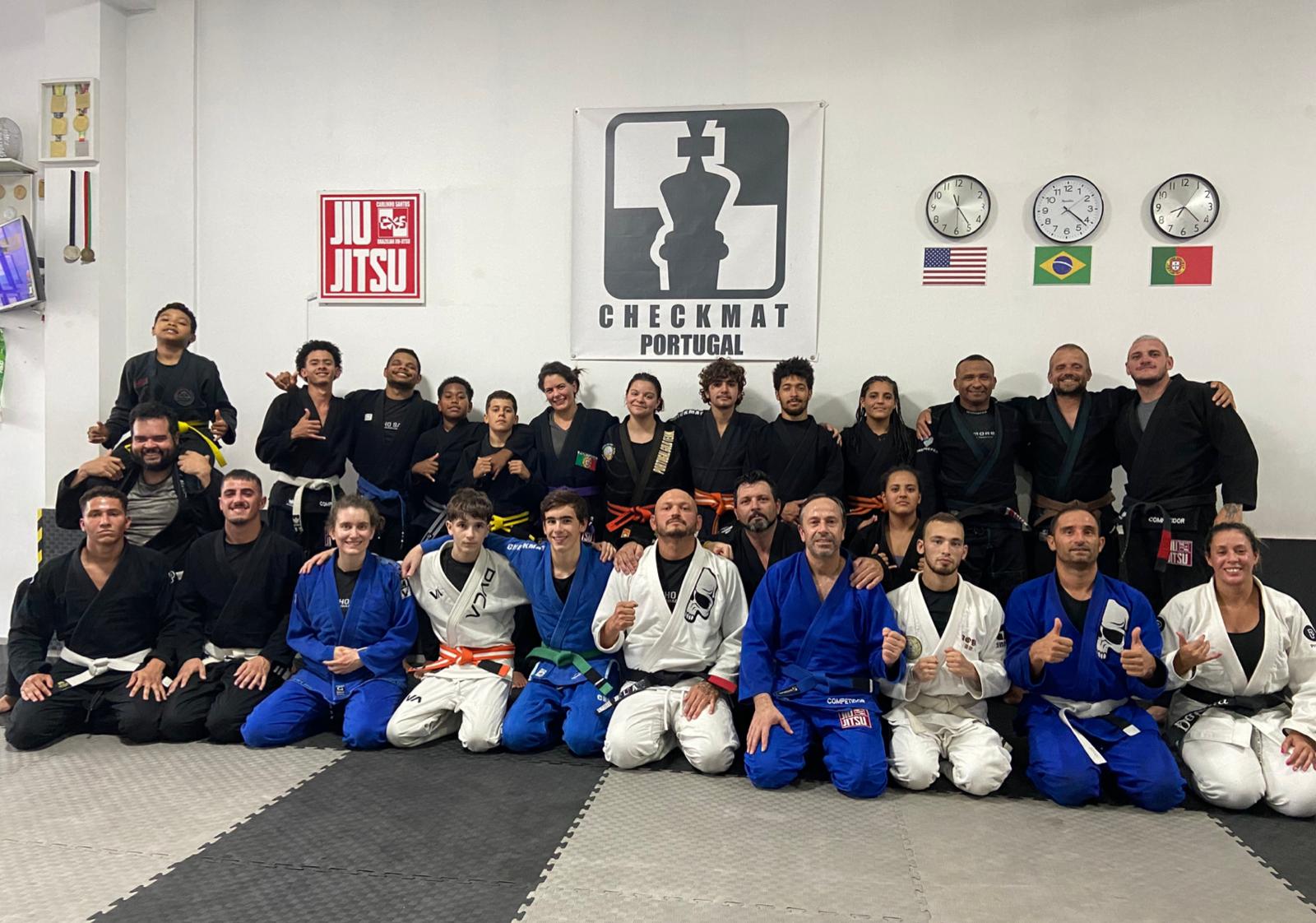
Portugal
A few days training in Portugal at the invitation of a friend — full mat, from kids to black belts.
Brazil
Alongside the professors who built the lineage the team carries.
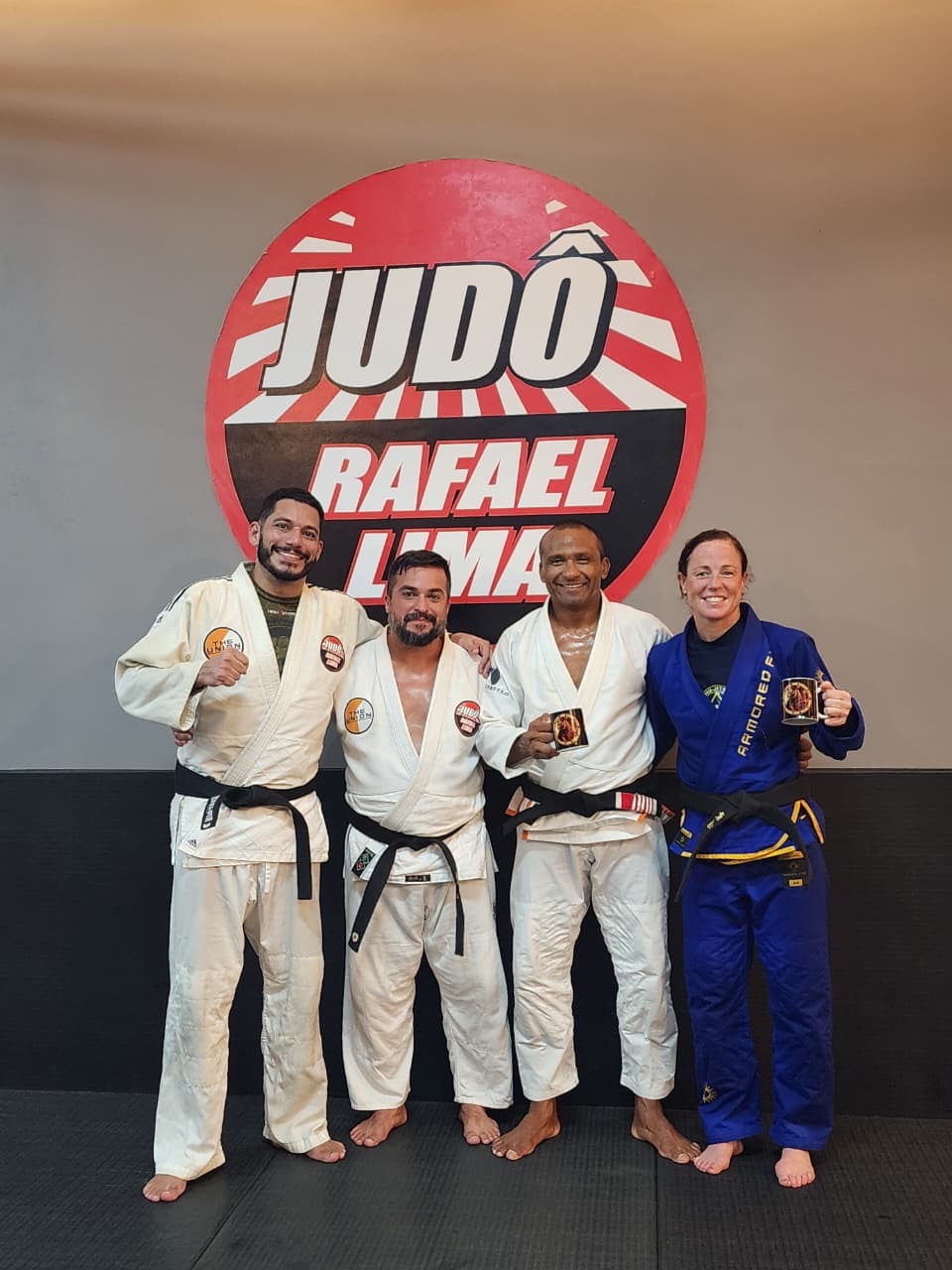
Brazil
The coaching staff behind the seminars and the police programs.
Europe, 2000s
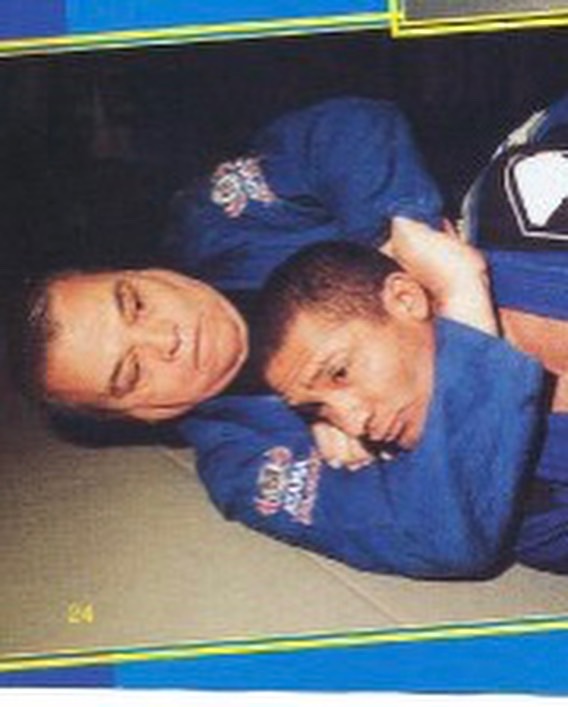
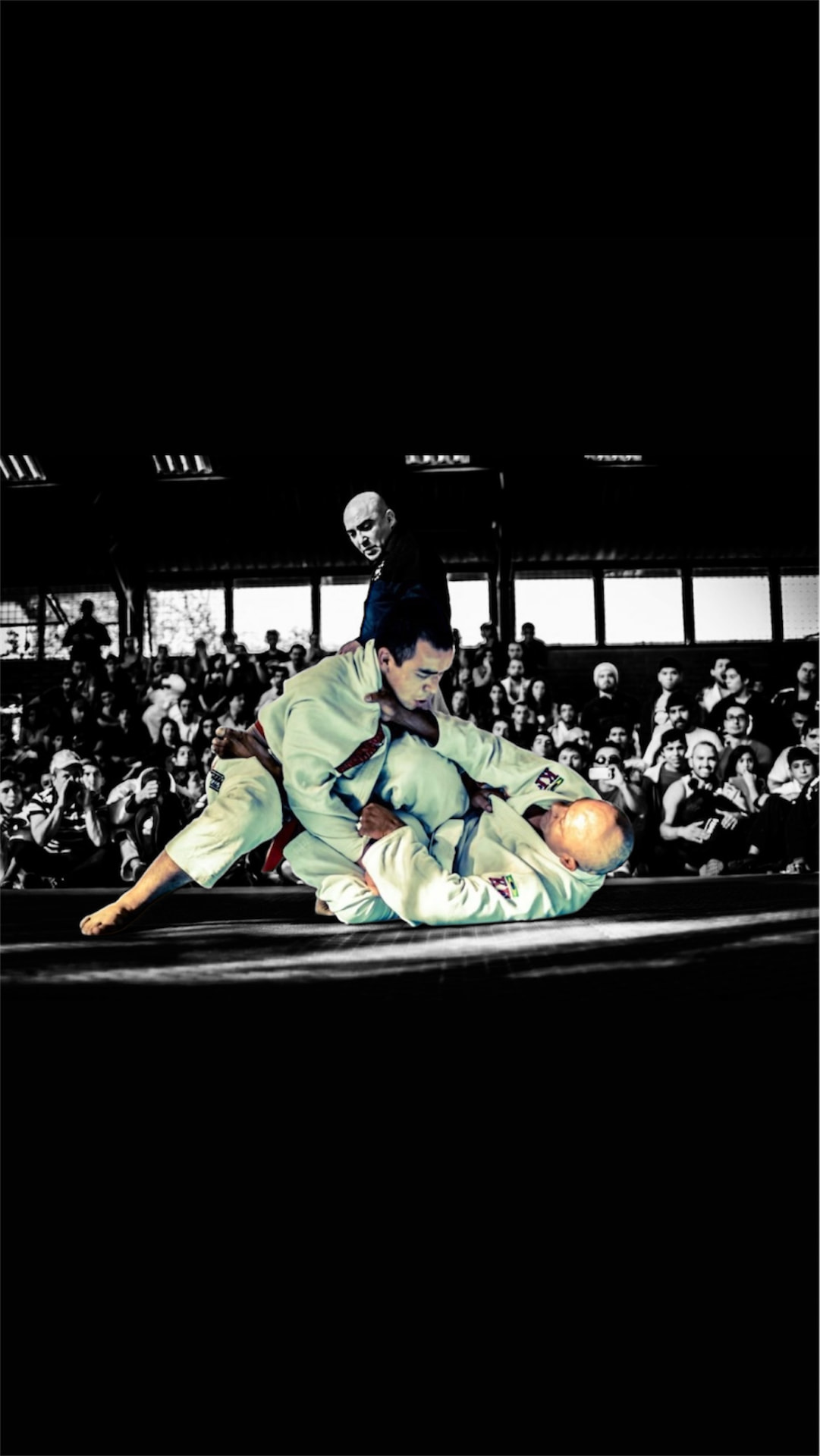
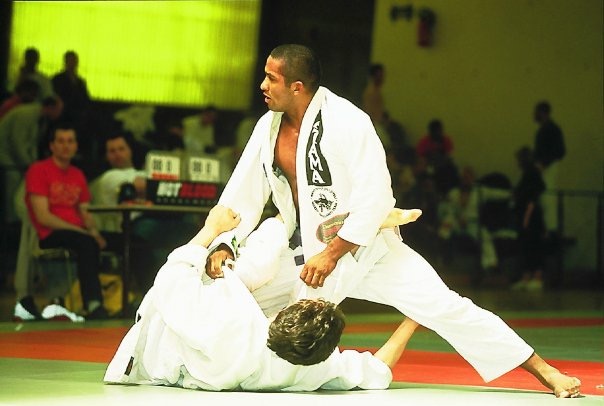
Back control locked in during a European circuit match.
Belgium, 2007
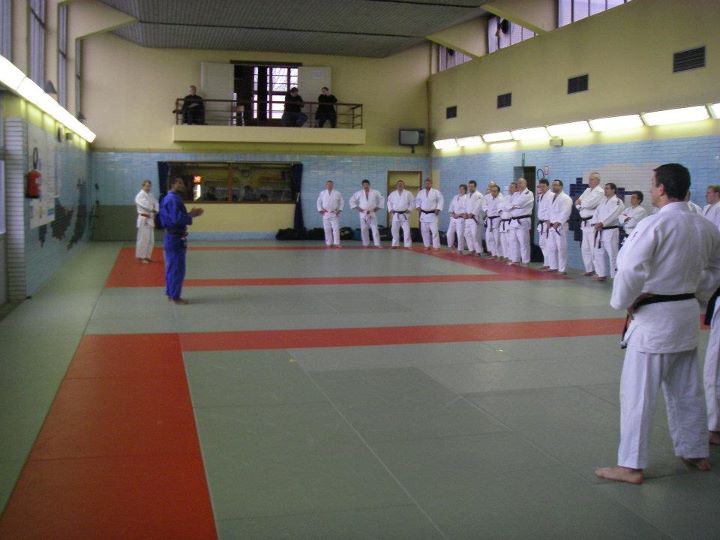
Seminar for the Belgian Francophone Judo League: judo to jiu-jitsu transitions, ne-waza and restraint work.
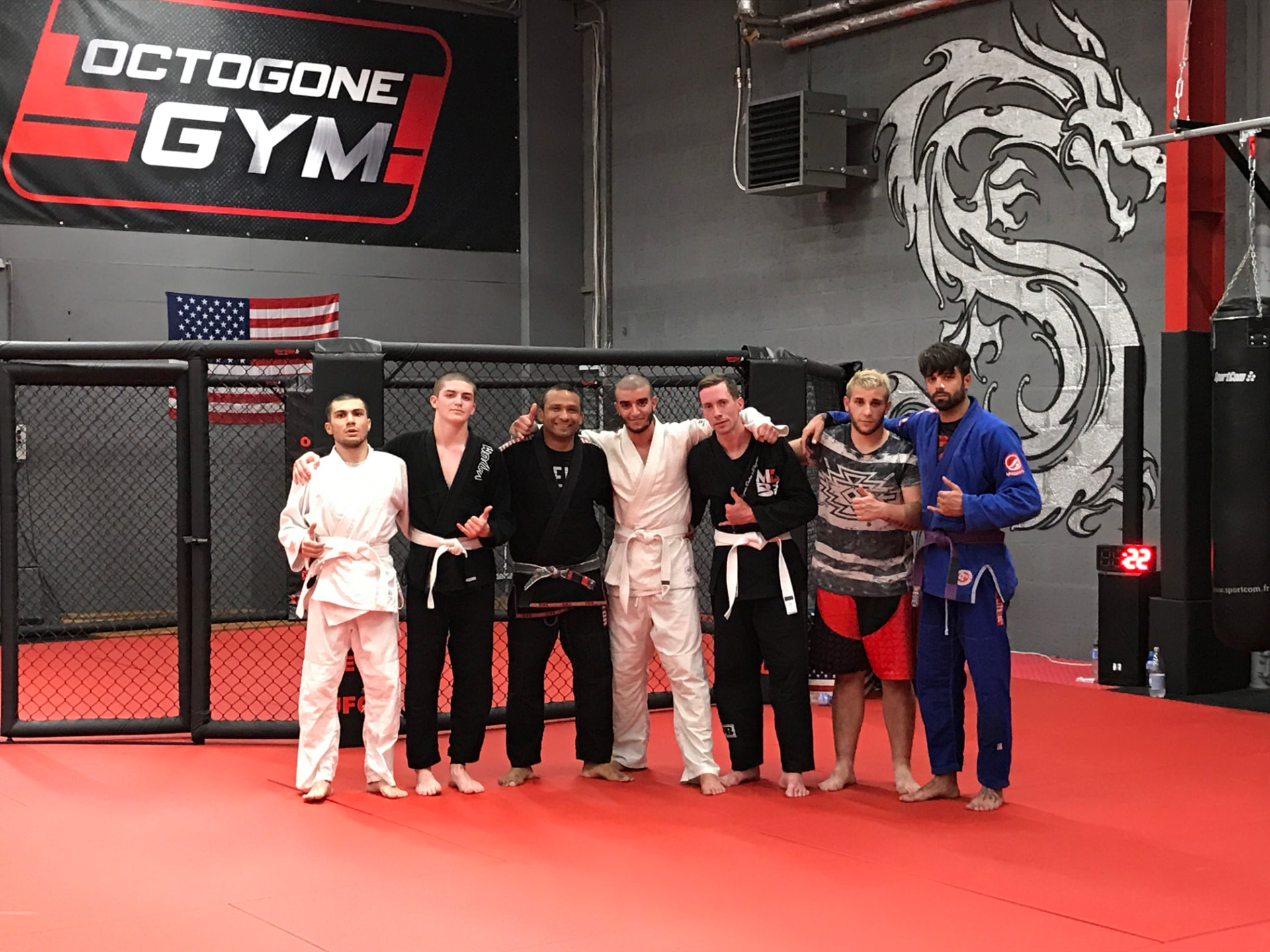
France
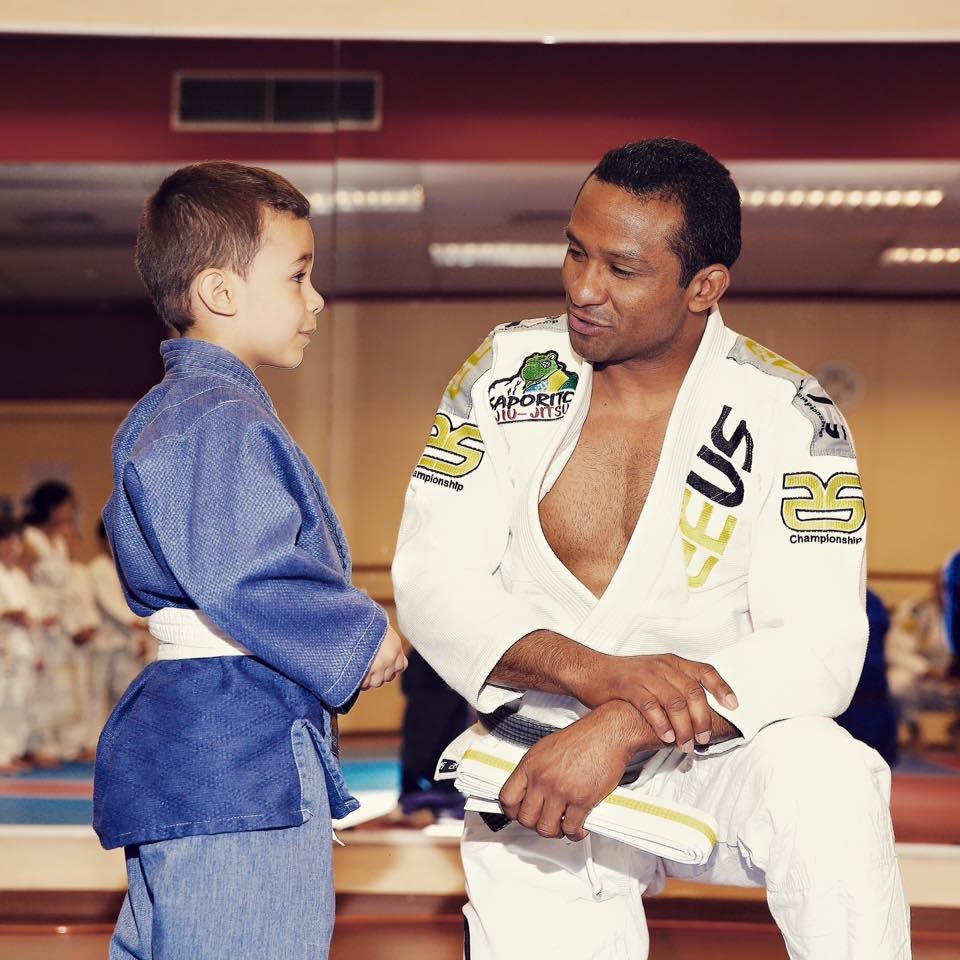
Mixed-level jiu-jitsu session, from white belts to black belts.
Europe
Teaching the next generation before a competition — where the method really gets tested.
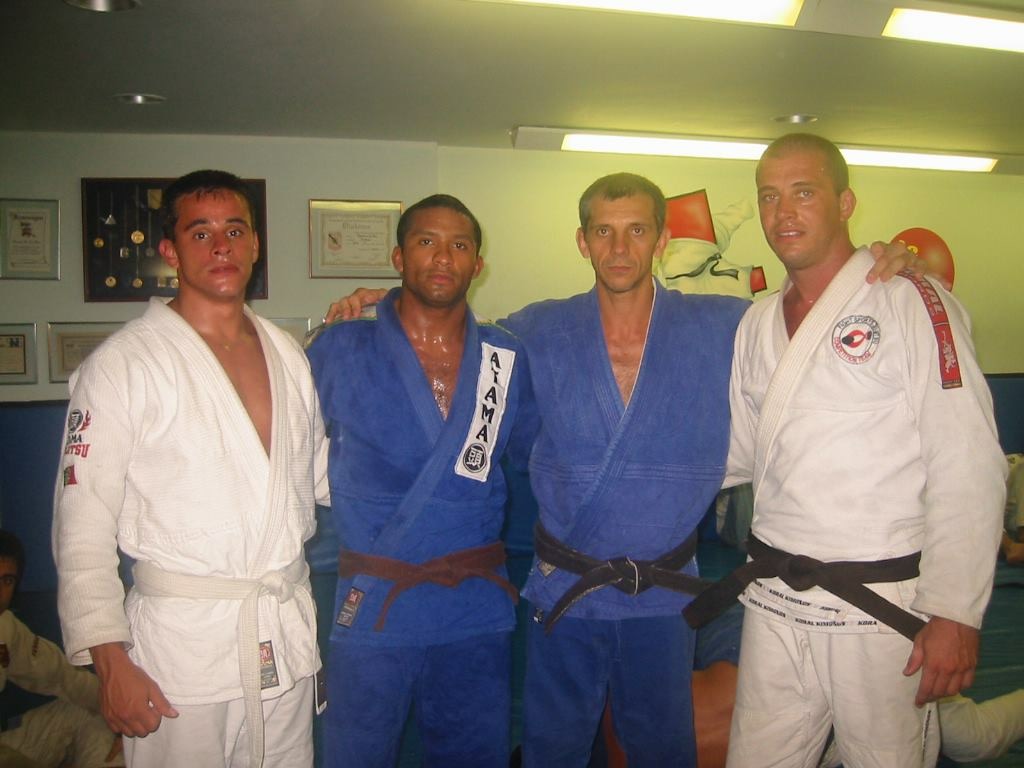
Europe, 2000s
Training partners and competitors from the years the continental circuit was still being built.
Brazil
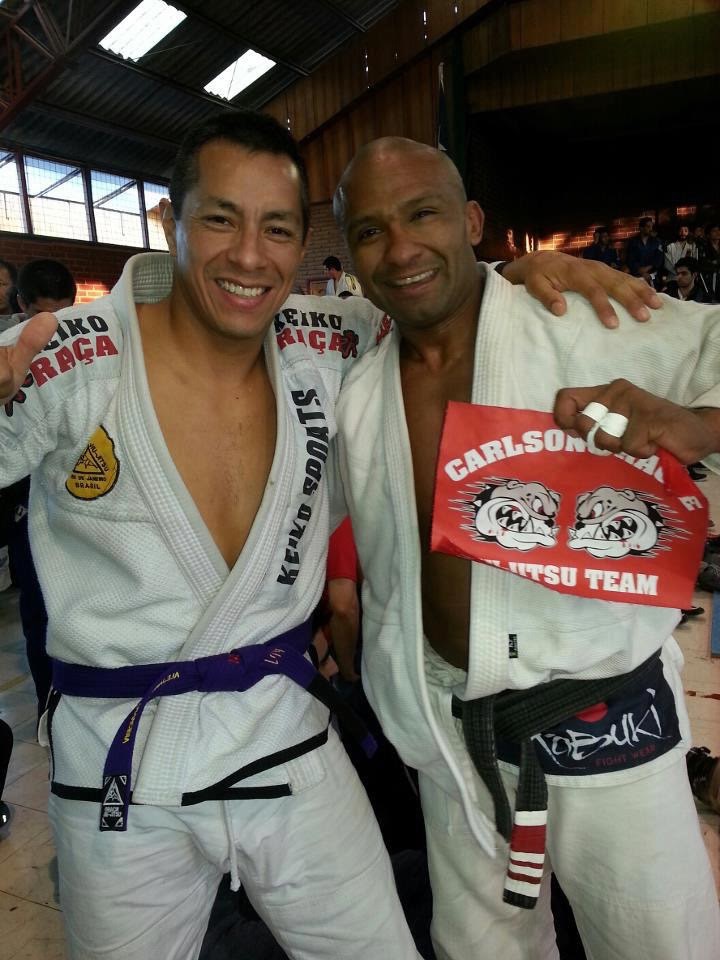
Backstage at a tournament with the team banner — the lineage that shaped the whole game.
Brazil
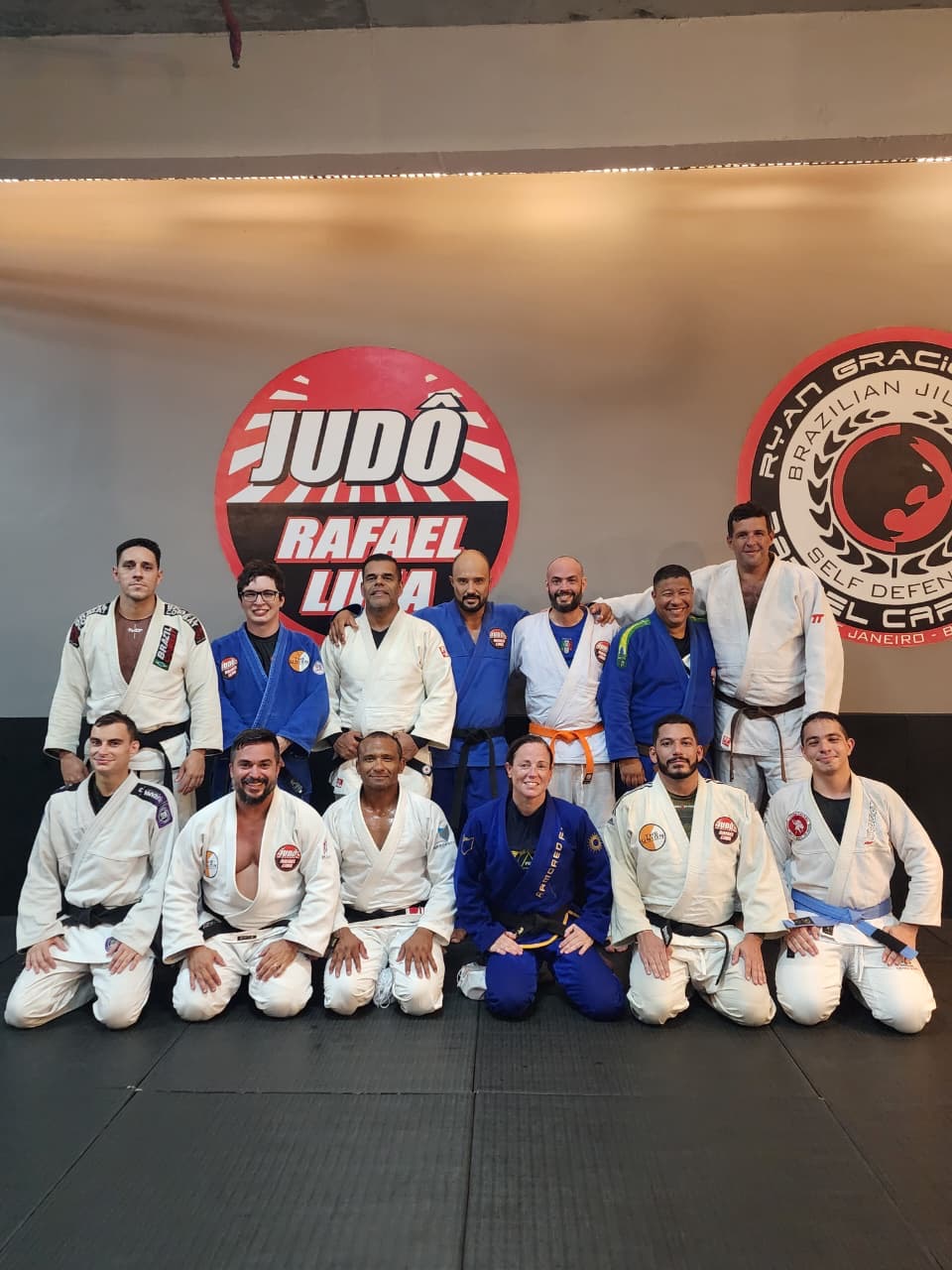
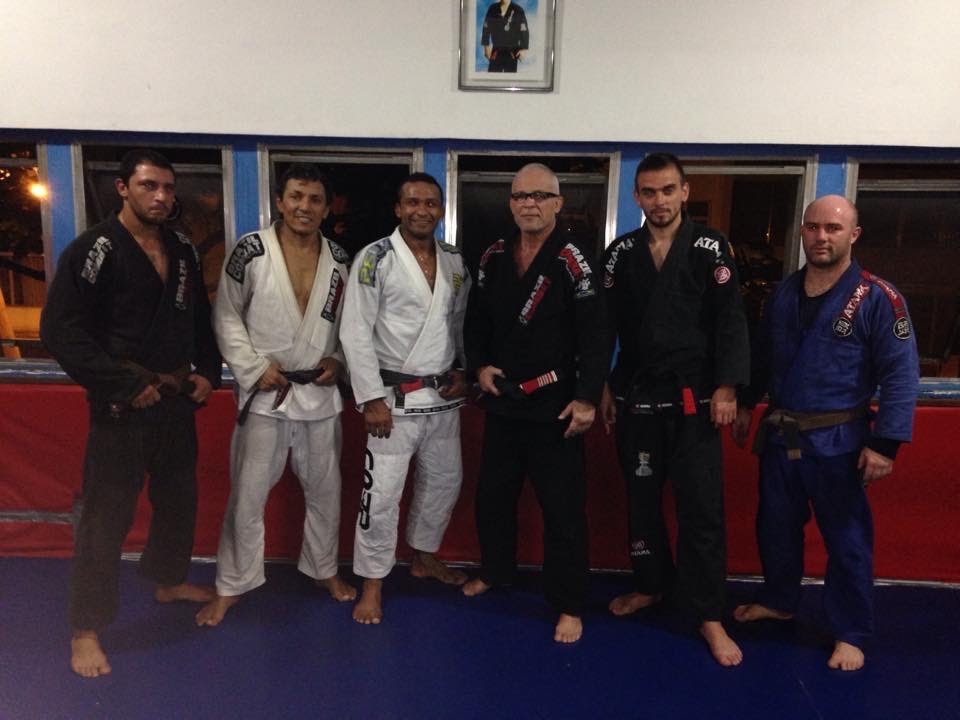
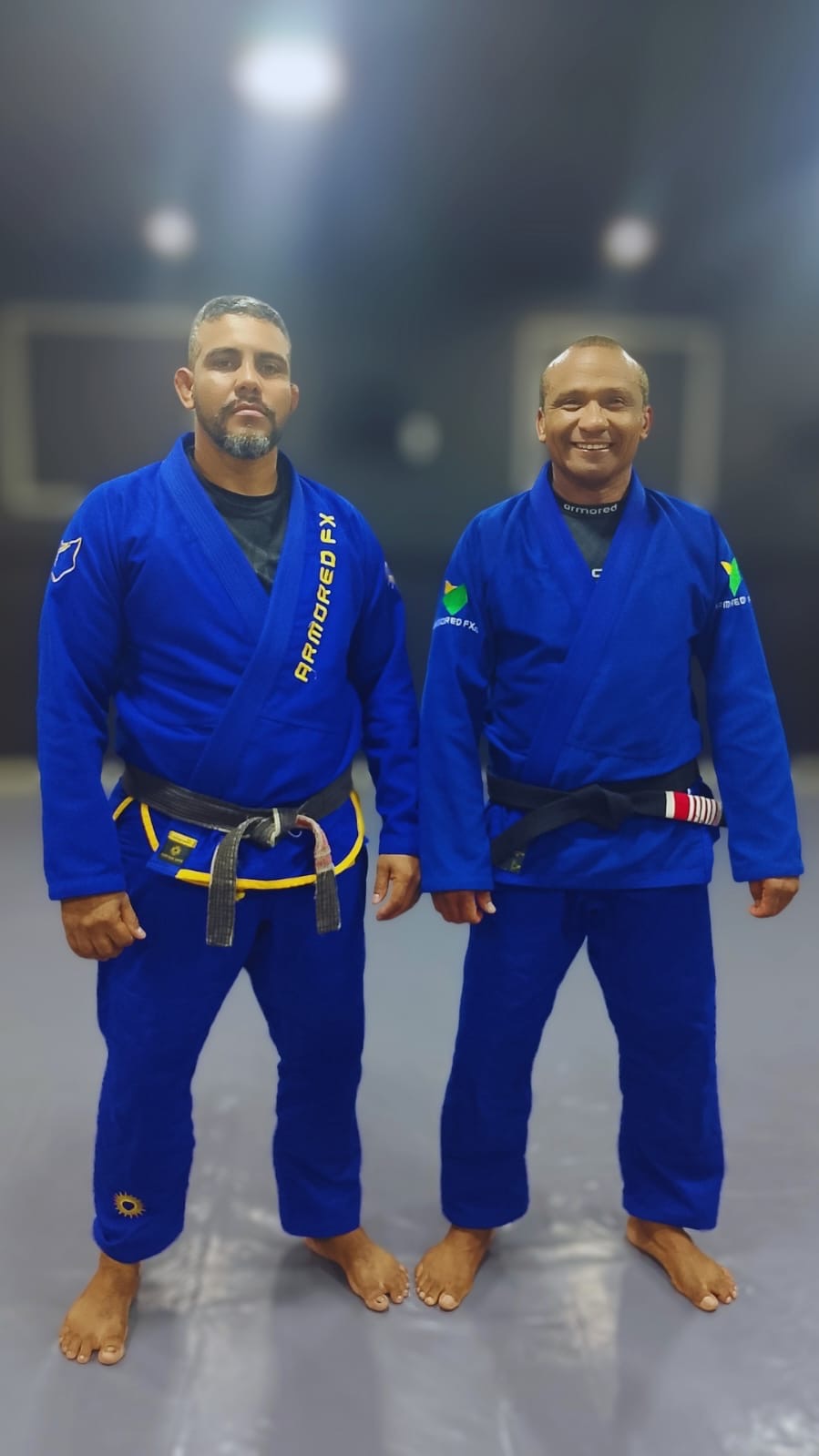
Black belts after a session; the training never stopped, only changed address.
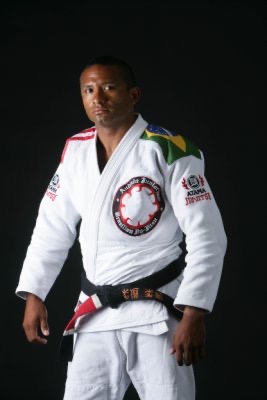
Black Belt — 5th Degree
Three decades of gi jiu-jitsu built on the Carlson Gracie blueprint: heavy top pressure, methodical passing and submissions that arrive as a consequence of position.
Black Belt
Judo is the foundation: kumi-kata, throws and the standing exchange that decides where a jiu-jitsu match is fought. It remains a core part of every class and every police programme taught.
Grip fighting as the first submission — controlling the sleeve and collar before anything else happens.
Throwing technique adapted to the jiu-jitsu ruleset and to real restraint situations.
Landing in a dominant position instead of merely scoring: judo entry, jiu-jitsu finish.
Palmarès
Titles won across Brazil and Europe, from purple belt to black belt.
Europe
Continental title in Brazilian Jiu-Jitsu.
Paris, France
Two-time champion of one of France's toughest open tournaments.
International
Gold in the BIG tournament circuit.
Netherlands
Title won on Dutch mats against European black belts.
Brazil, 1997
National title in the birthplace of the art.
Brazil, 1990s
Judo and jiu-jitsu championships across the north and north-east: Amazonas, Piauí and Fortaleza. Most of the photos from that era were lost over the years — the mat time was not.
Carlson Gracie lineage · black belt since 2006
Black belt awarded around 2006 — -36 years at black belt, today 5th degree.
Brazil
Judo and jiu-jitsu were trained side by side from the start — black belt in both.
Documents & Photographs
Original photographs and printed material, organised by decade and event. Every image is authentic and restored only for light, contrast and grain.
Professional Practice
Defensive tactics, ground control, handcuffing under resistance and arrest procedures for police and security units — built on jiu-jitsu and judo mechanics rather than force.
Operational experience in public security: risk assessment, crowd and event safety, escort and protection protocols.
Tactical intelligence and technology: information gathering, analysis, surveillance systems and equipment evaluation for operational teams.
Continuous professional training in physical education, security management and instructor certification across Brazil and Europe.
Police Training · Tactical
Police, intervention units and military teams across Belgium, France and Luxembourg — grappling-based control, weapon retention, scenario training and equipment evaluation.
TAE Tactical / Armored FX
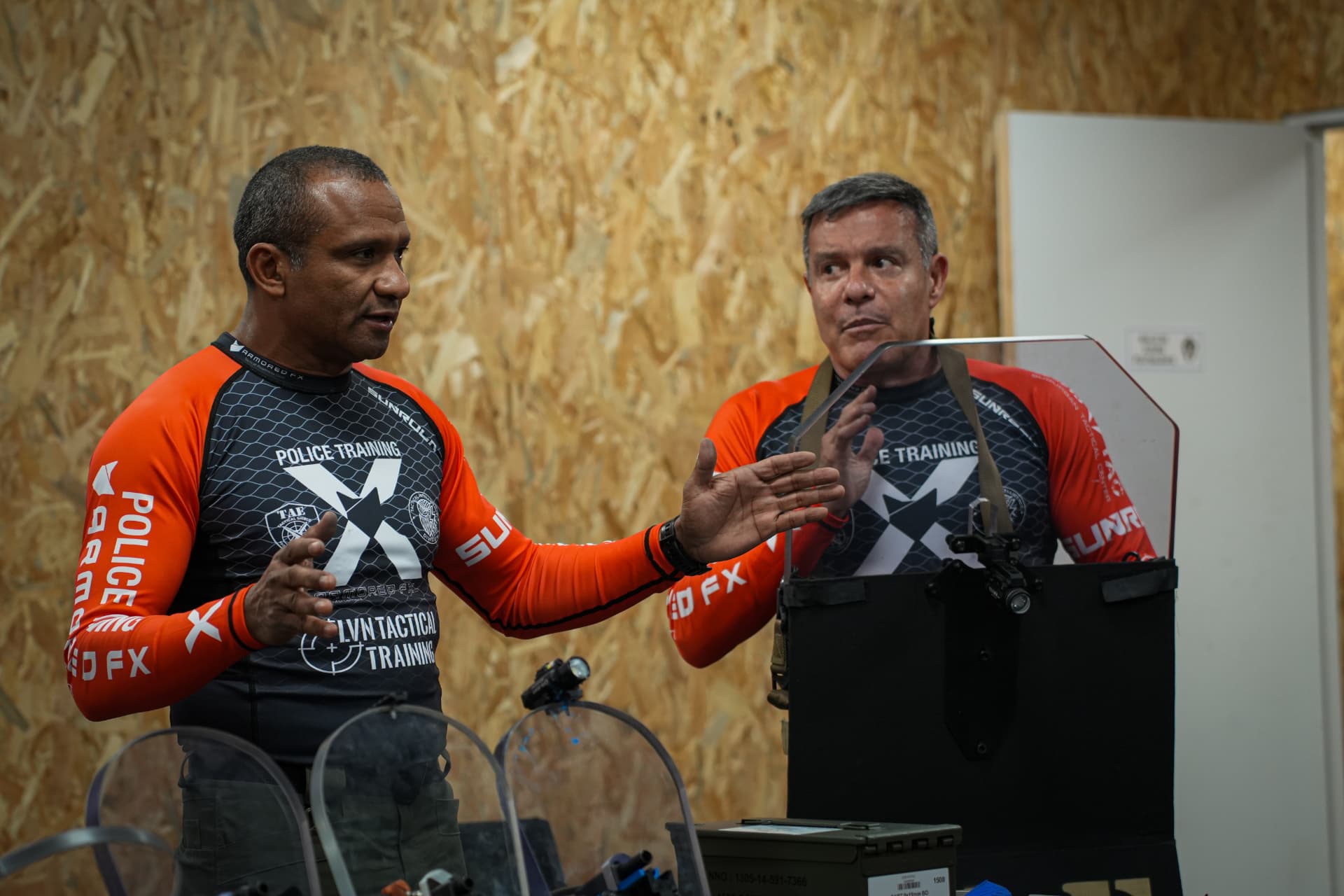
Co-instruction with tactical partners on equipment, ballistic protection and scenario design.
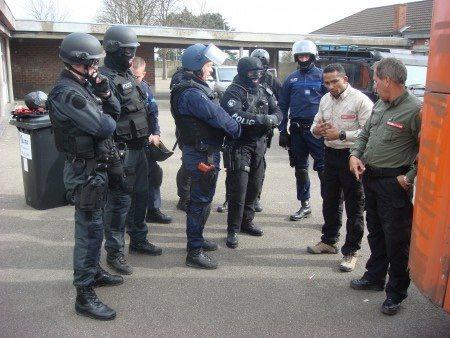
Belgium
Field debrief with an intervention unit after a full-kit scenario.
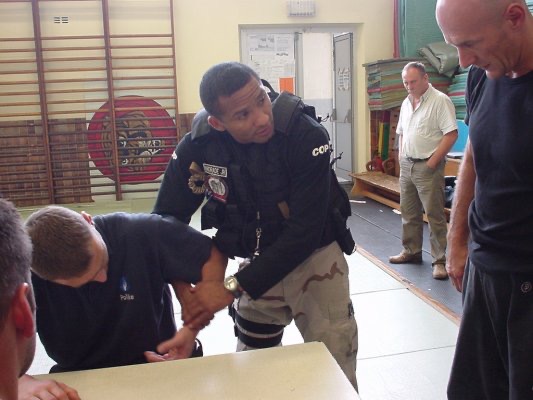
Police academy
Arrest and control procedures built on jiu-jitsu mechanics rather than strength.
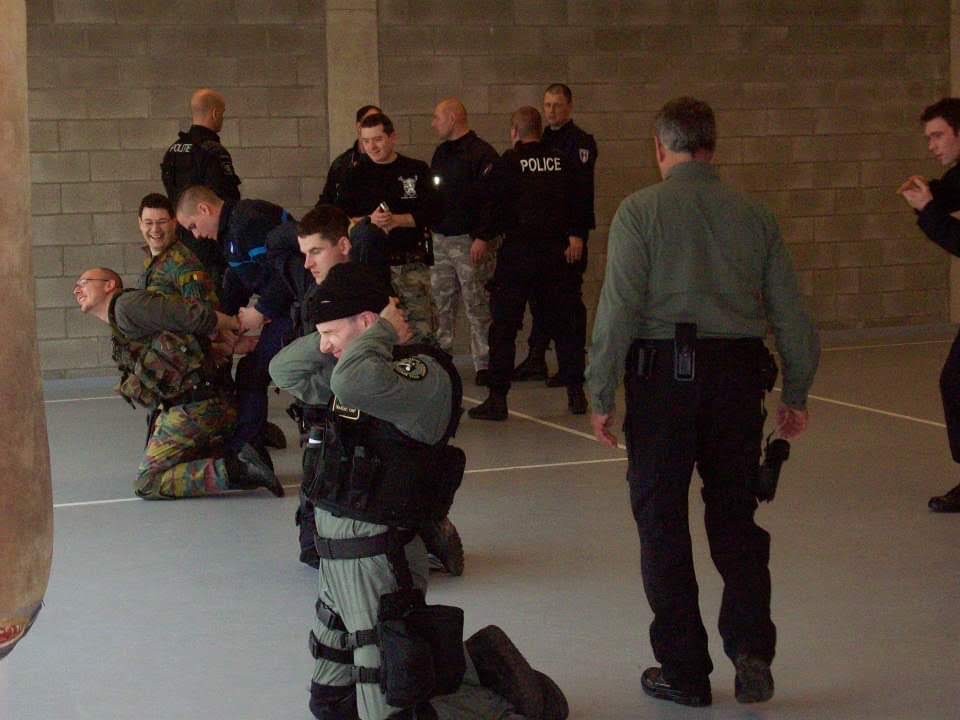
Belgium
Ground control and restraint work with mixed police and military teams.
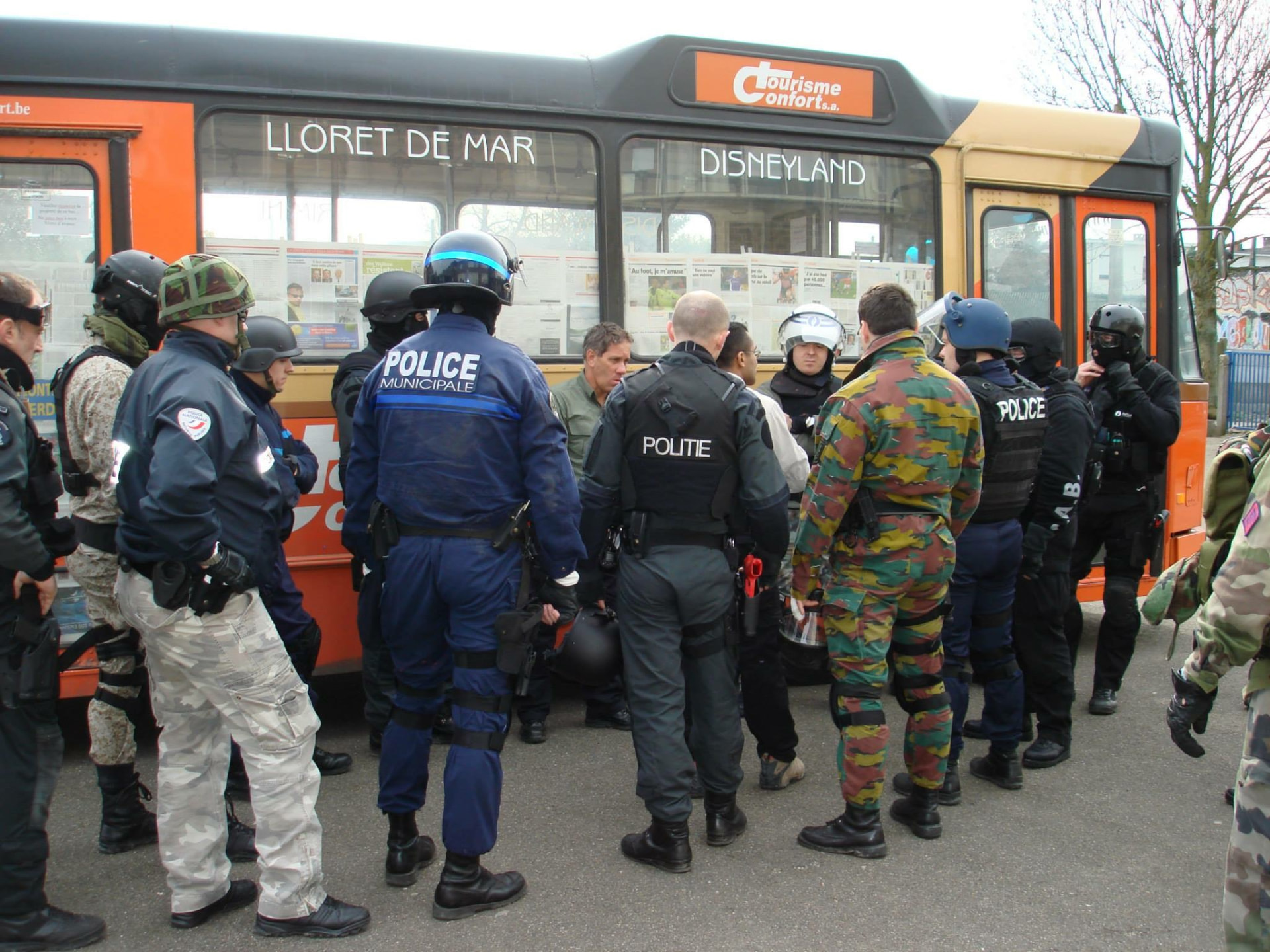
France / Belgium
Joint exercise with municipal police, politie, national police and army units.
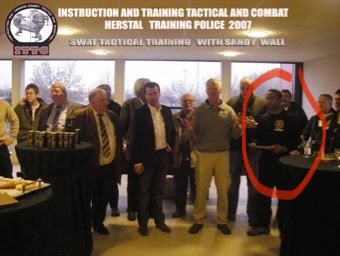
Herstal, Belgium
SWAT tactical training program, Instruction and Training Tactical and Combat.
Brazil · France · Luxembourg · Belgium
Origin, formation and national title — plus defensive tactics work with the Federal Highway Police (PRF).
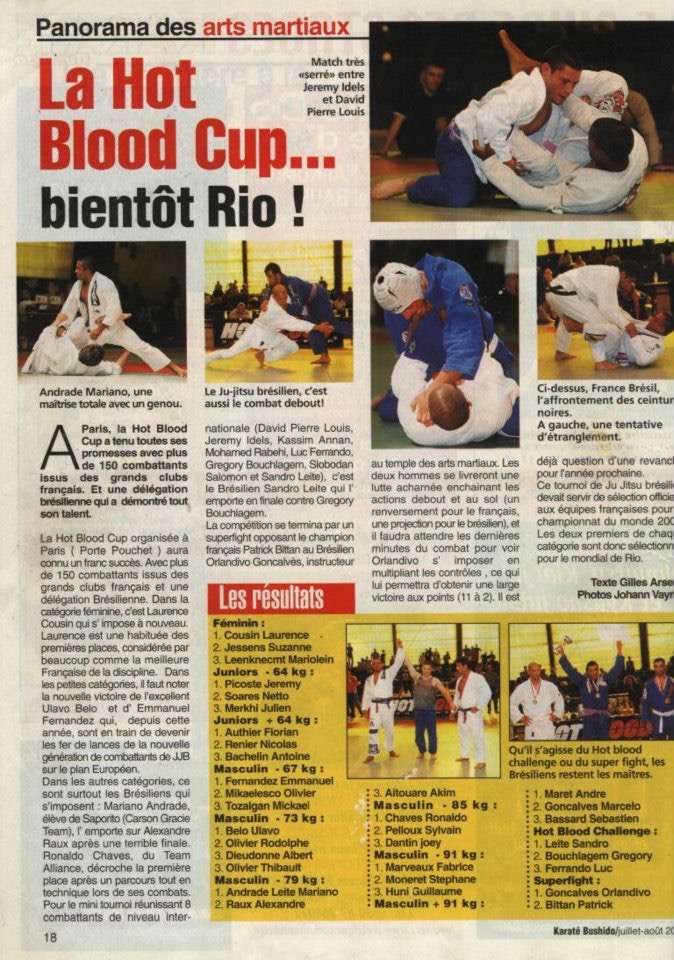
Competition circuit, Hot Blood Cup and European Cup; French units in joint equipment demonstrations and intervention courses.
Instruction, seminars and private coaching during the Luxembourg years.
Team building, affiliates and police programmes — I.T.T.C. SWAT tactical training in Herstal, 2007, with US SWAT instructor Sandy Wall, then part of Mrs. Bush's protection detail.
Training delivered to the anti-drug unit of the Spanish National Police in Gran Canaria.
Days on the mat at Checkmat Portugal, at the invitation of a friend.
The whole of 2013 based in Santiago de Chile — training, teaching and exchanging with the local grappling and security community.
Languages
Clippings
Scanned newspaper and magazine coverage from the European circuit.
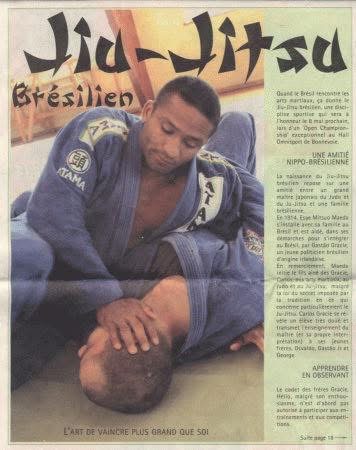
Luxembourg press — full page feature
Luxembourg years
« Quand le Brésil rencontre les arts martiaux, ça donne le Jiu-Jitsu brésilien, une discipline sportive qui sera à l'honneur le 8 mai prochain, lors d'un Open Championship exceptionnel au Hall Omnisport de Bonnevoie. » The article retraces the Nippo-Brazilian friendship behind the art: Mitsuyo Maeda's arrival in Brazil in 1914, the Gracie family, Carlson Gracie — and the method of learning by observing before executing.
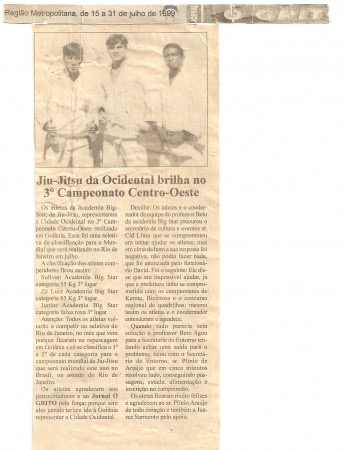
Região Metropolitana
15–31 July 1999
Brasília years: the Centro-Oeste championship in Goiânia, with athletes of Academia Big Star representing Cidade Ocidental — gold in the 55 kg and 65 kg categories and a run of podiums that pushed the team towards the Brazilian national circuit.
Karaté Bushido
July–August 2003
Une maîtrise totale, du genou au dos — la délégation brésilienne domine le tapis.
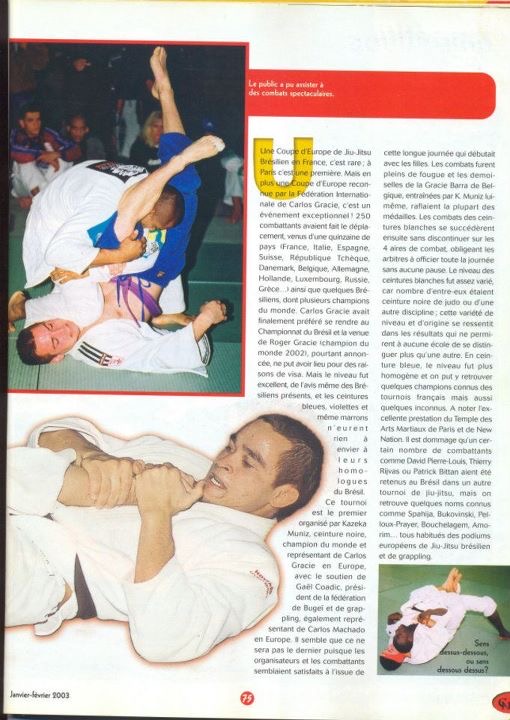
Magazine feature
January–February 2003
250 combattants, une douzaine de pays et une délégation brésilienne à Paris.
Photography · click to enlarge
Tap any frame to open it full size and read the story behind it.